

OUR STORY SO FAR
ROS Musical Theatre is an award winning community theatre group in Ruislip, North West London, United Kingdom.
Founded in 1923 - the same year as the likes of Disney, Time Magazine and Warner Brothers - ROS Musical Theatre (known for most its years as Ruislip Operatic Society) has been at the heart of live theatre in Ruislip ever since, creating over one hundred and thirty productions to date. Over the years, the Society has performed many different styles of live performance, ranging from the classics to modern musicals and music concerts. The group currently produces two full musical productions a year, alongside hosting various social gatherings and taking part in local community events.
Members of the Society hold a shared belief that live theatre brings people together in a remarkable way and are dedicated to bringing the magic of live performance to musical theatre fans and local community through a talented, inclusive and friendly society. Click here to get involved.
With over a century of producing live theatre, ROS Musical Theatre has a rich and varied history. Click here to view the Society's past full scale productions since 1925.
Continue scrolling to take a deep dive into the creation of the Society over one hundred years ago and its existence ever since.

Ruislip Village, 1907
Ruislip Village, 1907

1942 production of Tom Jones

1934 photo of ROS in The Sketch magazine

1943 cast of Blossom Time

Read through for 1952 production of Love At The Inn

1967 performance of Trial By Jury for opening of Winston Churchill Theatre
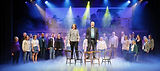
2026 production of Come From Away

Photo of/by name of Person or Place or Credit
2026 - Come From Away
Chapter 1 - Humble Beginnings
Known for its unique blend of ancient heritage (dating back to the Domesday Book of 1086) and vast green spaces, Ruislip is a suburb in the Hillingdon Borough of West London (formerly Middlesex). During the early 1920s, Ruislip was experiencing rapid growth as a commuter suburb due to the Metropolitan Railway's "Metroland" expansion and post-World War I house building. Between 1921 and 1931, the area's population grew by nearly 76%.
As Ruislip’s inhabitants increased, so did the demand for local entertainment and thus the idea for a local musical society was born. The spark was initially lit by Mr Ralph E. Humphriss, a keen musician who had recently moved to Ruislip with his family, having previously lived in Beaconsfield, Buckinghamshire, where he was heavily involved in the Beaconsfield Choral Society.
In a 1991 newspaper interview with Ralph’s son, long-serving Society member Alan Humphriss, Alan stated that his father had set about trying to form a society after realising there were no groups for music or drama in the area.
Having gained more support for the project, the idea for a musical society in Ruislip was officially proposed by Reverend E. Bewlay (seconded by Mr R Howland) at a public meeting held by the Ruislip Association on 17th December 1923. As reported later the same week in both the Uxbridge & W. Drayton Gazette and Buckinghamshire Advertiser, “...the suggestion was received with warm approval, the resolution forming such an organisation being unanimously adopted.”.
Although the idea came from a meeting of the Ruislip Association, it was decided that the brand new Society should operate as a separate entity. Having first suggested the Society's creation, Ralph Humphriss was appointed as Company Conductor, joined by Mr. Hodges as Society President, Mr. Edwards the Deputy Conductor and Mr. Soames as the Secretary and Treasurer. A committee was also formed.
And so our story begins, Ruislip Musical Society was officially established. By all accounts, it was an incredibly exciting time indeed but there was now lots of work to be done. The founding members soon began building the structure of the Society, laying the foundations for what it would eventually become...
1942 production of Tom Jones
Chapter 2 - Early Days
On the 1st February 1924, the local press reported that “The first practice of the newly-formed Ruislip Musical Society was held at The Assembly Rooms (located in the former George Hotel, now Brown’s, Ruislip), where some forty music lovers were present. The committee have decided that for the present no voice test will be held, and all music lovers are invited to join the Society, either as active or honorary members. There are already about fifty members.”.
As buzz grew locally for the presence of a new musical society, the group spent the remainder of the year concentrating on rehearsals, building up their collective repertoire and enlisting volunteers to join their growing list of members. Much like present day, the founding members of the Society held strong community values, striving to create a warm and welcoming atmosphere for all to enjoy.
In July 1924, members of the Society performed alongside members of the Ruislip Glee Singers at the official opening of the Ruislip Scouts’ headquarters, in a concert arranged by Mr Humphriss. The West Middlesex Gazette reported “For such an idyllic setting as the terraced lawns of a tree-girt garden could surely be counted on to call forth effectively the haunting melodies of the "native woodnotes wild," which are enshrined in our English glees and part songs.”.
On the 10th October 1924, local press reported on a big change for the Society, with one writing “Although only formed last season, the Ruislip Musical Society has made progress, but there is a proposal by the Society to extend its field to operatic and dramatic work.”. Six days later on 16th October, almost a year after its creation, the Ruislip Musical Society held their General Meeting at Fabb's Restaurant, where the decision was made to change the name to The Ruislip & District Musical & Dramatic Society. This proposal was carried unanimously and the committee quickly began to make arrangements to enlarge the scope of the Society's work on musical, operatic and dramatic elements, as soon as the necessary arrangements could be made.
As they continued to shape the Society into what it would later become, the group looked forward to their debut production. In late November of 1924, the Buckinghamshire Advisertiser writes “The rehearsals of Edward German's ‘Merrie England’, to be produced shortly, are now in full swing under the conductor-ship of Mr. Humphriss, and such an event in the near future promises to be quite a novelty for Ruislip.”. In what is possibly the first documented case for ROS of the age-old dilemma which seems to humorously plague many amateur theatre groups - not enough tenors - the article goes on to say “More male voices, and especially tenors, will be an additional asset.”.


Click photo to expand gallery
April 1925 marked a momentous occasion as the Society made its first ever public performance. It was a concert version of Merrie England, performed in the Wesleyan Church Hall on Ickenham Road, Ruislip. The handbills advertising the show stated that the Society had "spared no pains to do justice to the Opera and hopes it will be the first of many successes.". With Mr R. E. Humphriss at the reins of production and musical direction, the show was an absolute success. Pre-box office demand was strong from the beginning and the show sold well. The Society's presence in the local community was firmly established.
Ralph Humphriss acted as Producer and Musical Director for all but one of the early musical productions up to 1938. The one time he was relieved of his duties was in 1935 when he handed the production reins to Gordon Stanford and took the part of Major General Stanley in Pirates of Penzance. Alexander Boret stepped in as Musical Director.
The Society's first full show was Iolanthe, performed at Ickenham Village Hall in 1927. Final rehearsals had now taken place amid last minute set preparations, with cast members told to exercise caution upstage as the paint was still drying on the back wall. Alas, as the story goes, one cast member was not careful enough and emerged bedaubed behind, no doubt to the amusement of those around.
One review said “It was a bold step for the Ruislip and District Musical and Dramatic Society to take up opera in complete array, but boldness has justified itself. They produced Gilbert and Sullivan's ‘lolanthe’ at the Ickenham Parish Hall last week with a degree of success that was startling to the natives, who so usually deprecate local talent, as it was also to those visitors who imagine that the towns enjoy a monopoly of talent.”.
By this point, roles within the Society involved far more than just performing - including set build, props, costumes, lighting, publicity and front of house. With the ever-growing Society now firmly shaping local culture, the following production of Pirates of Penzance in 1928 broke new ground with four performances - two nights at Ickenham Village Hall and two at the Parish Hall in Eastcote. Back in these days, tickets were purchased by visiting either Mrs Humphriss at Curzon Cottage on Sharps Lane or Fabb's Resturant in Ruislip.
1934 photo of ROS in The Sketch magazine
Chapter 3 - A Decade Later
By 1933, ten years after its conception, the Society was thriving with positive reviews from growing audiences. In 1934, the Society’s cast photograph was featured in the January edition of a beloved London based arts magazine called The Sketch.
1935 saw big changes for the group as it was renamed again, this time to the Ruislip Operatic Society. This name would remain for the next 90 years, most of the group's lifetime so far.
One year later in 1936, Ruislip Operatic Society began producing their shows at the brand new Rivoli Theatre in Ruislip, starting with a production of Maid of the Mountains. Built only seven years earlier, the new venue owned by Shipman & King boasted a much bigger stage and greater opportunities for the group. Despite this much more modern feel, however, changing rooms were a forgotten luxury and so some of the cast had to run back and forth to Pam’s Restaurant opposite several times throughout the evening to change.


Click photo to expand gallery
Published on 6th November 1936, the Uxbridge & W. Drayton Gazette labelled the production as a “Triumph”, writing: “Thirteen years ago, chiefly owing to the interest and enthusiasm of Mr. R. E. Humphriss, the Ruislip Operatic Society was formed. Despite superstition, the officers decided to stage "The Maid of the Mountains" to celebrate the Society entering its "teens." For this, the most ambitious effort during the history of the Society, the Rivoli Cinema was hired for the whole week for the event, and performances were given to appreciative and enthusiastic audiences. And what a success it was! The comfort and warmth of the Rivoli made the entertainment all the more enjoyable, and the stage with the excellent lighting and fine scenery added to the whole effect.”
With the Rivoli theatre located just off of Ruislip Highstreet on Ickenham Road (opposite the row of shops where Pizza Express is now), the Society flourished in this new home for several years. The Rivoli eventually closed in 1966, replaced by the new Sainsbury’s supermarket in 1968. Since 2001, there has been a block of flats on the site.
By 1938, when Rio Rita was performed, the Society boasted a membership of more than one hundred and was contemplating using Ealing Town Hall to hold rehearsals. To further mark its growing sense of identification with the local community, the Society began presenting cheques to local hospitals, whether the show made a profit or not.
1943 cast of Blossom Time
Chapter 4 - The War Years
In 1939, despite the outbreak of World War II, the Society performed the ever-popular show No, No, Nanette and made the decision to carry on - as far as possible - presenting at least one production each year.
Much like most of the world, World War II was an incredibly difficult time for the community of Ruislip. During 1940-1, roughly 1390 bombs were dropped on Ruislip. 146 houses were demolished, 482 severely damaged and 3239 were slightly damaged; 23 people were killed and 52 injured. The bombing largely stopped throughout 1942-3, though a damaged Wellington bomber crash landed in South Ruislip on a Sunday afternoon in October 1942, unable to reach the nearby RAF Northolt (also in Ruislip). Twenty one men, women and children died. The Doodlebugs of 1944 destroyed another 17 houses, killing four more people.
Whilst it was a dark time indeed for the residents of Ruislip, members of Ruislip Operatic Society found light in the community of their Society. Whilst determined to carry on, the war years brought problems for the group with many men and women away in the armed forces. Rehearsal rooms were difficult to come by and it was not unusual for the men to arrive at rehearsal complete with tin helmets, ready for an 'alert'. Productions during this time reverted, of necessity, to a more modest scale and audiences were invited to the Ruislip Parish Hall to enjoy the 1940 production of H.M.S. Pinafore, produced and directed by Jas Edmondson.
Space was at a premium at the new venue. The single row of footlights at the front of the small stage was taken out and scenery was built hard up against the back wall to maximise the playing area. As a consequence there was no way to get from one side of the stage to the other so this manoeuvre was accomplished by traipsing through the Headmaster’s study, situated behind the stage. Difficulties arose on those occasions when he had locked the door, made worse whenever the telephone in his office rang in the middle of a performance. But the Society
During the early war years the fear of imminent invasion led to the introduction of some imaginative schemes designed to confound an invading army. The Society played its part in this particular area of the war effort by allowing the deletion of part of the word Ruislip that appeared on the front pages of the programme for each show. Confusing enough for the locals, let alone an enemy force. In 1942, Tom Jones was performed in June to avoid as much of the blackout as possible and the 1943 show Blossom Time featured a male chorus chiefly comprised of Air Raid Wardens and Home Guards.
While the heaviest bombing of Ruislip occurred earlier during the Blitz (1940–1941), the area faced renewed attacks in 1944 during Germany’s V-weapons offensive due to its proximity to RAF Northolt, high-value airfields and local rail links. For the Society's presentation of Katinka that year, the show was performed to a finish despite the sound of the first "doodle-bugs" passing overhead, during the finale of Act II. A bold and defiant act of the arts in the face of tragedy. Many years later in 2010, the Society paid tribute to the war years with a production of Lionel Bart's 'Blitz!'.
Throughout the war, Ruislip Operatic Society held a series of concerts jointly with Ruislip Dramatic Society to support ‘Salute the Soldier’ week - an initiative that raised funds to support and equip the British Army. Additionally, the proceeds from programme sales were donated to the local Red Cross Prisoners of War Fund for all shows throughout the war until the Society's production of Desert Song in 1945, where they donated to the Bishop Winnington Ingram School Social Fund - a sign that people were switching their attention back from a world-wide, war-torn scene to local issues once more.
A sense of hope and peace for the future came in 1945, which was also deemed to be the Society's 21st anniversary and so the group celebrated with a dinner and cabaret at Lyttons Restaurant on 19 April, not long before the war ended. The cabaret was provided by Herbert Haywood (Magician), Kitty Keys and Connie Groom (The Rare Pair) and Peter Brough the Ventriloquist, who later had much success with his radio show “Educating Archie”.
It is a matter of considerable pride that the Society achieved its aim and maintained an unbroken run since 1925, throughout the war years and nearly ever since (with the exception of 2020/2021 due to the pandemic).
Read through rehearsal for 1952 production of Love At The Inn
Chapter 5 - A New Era
With the war finally over but the wound still very fresh, like the rest of Britain, the Society picked themselves up and looked toward the future, with 1946 seeing their return to two productions a year with Edwardian musical comedy The Arcadians in March and The Mikado in December.
The Society followed this up with the show Maritza, produced by Joe Fuggle, in April 1947 and then a Christmas concert under the direction of Mr Humphriss, which featured an excerpt from Smetana’s The Bartered Bride, arranged and conducted by Bill Hoare, as a prelude to the role he was to take on with such distinction a few years later. Bill had acted as Assistant Conductor to David Levine and sung the role of Micha when the British Grand Opera Society performed the work in 1938 and so know the music well. A notable member of the Society, Bill Hoare is a name that appears a lot throughout the history of Ruislip Operatic Society.
In 1948, Mr Humphriss returned as Musical Director for “RUDDIGORE”, then again in 1949 for Merrie England - completing a circle having conducted the company for the first time 24 years earlier at the Society's inaugural performance, a concert version of Merrie England. ROS also made regular appearances in the Ealing Festival around this time.
Throughout the 1950s, the Society continued to perform at the Ruislip Parish Hall, Eastcote Road. Though the facilities were poor, the group battled on and the dedicated backstage staff performed miracles with scenery and lighting to bring each production to life.
In February 1950, while spending some months in the USA, Bill Hoare received a cable from Vice Chairman Mr Smith asking him to take over the Musical Directorship of The Rebel Maid. Opening night was scheduled for March 15th and so there really wasn't much time. Undaunted, Bill obtained a miniature vocal score of the show from the music store in Columbus, Ohio and spent the six day sea crossing from the States refreshing his memory of the work. All went off well and Bill continued as Musical Director - with one or two interruptions - for thirty-six years. He was a valued member of ROS for 58 years.
In 1959, a change of venue beckoned with the Society performing at a theatre known as the 4MU Theatre on the United States Air Force base in West Ruislip. In reality, the “theatre” was in fact a large disused hanger with years of rubbish piles stacked up inside. The Society was faced with the considerable task of cleaning up the area before preparation could begin for setting up the stage - taking an entire day and ruining the first proposed rehearsal.


Click photo to expand gallery
One year later there was yet another venue change, this time moving to Queensmead School in South Ruislip. Having been built only 7 years earlier, the school came with the benefit of a large stage and modern equipment. This remained the Society’s home until 1967, with a production of Iolanthe.
Two years prior, Ruislip Operatic Society had been chosen to perform at the official opening event for the Winston Churchill Hall, now the Winston Churchill Theatre. Theatre in Ruislip. 1965 witnessed the birth of the Greater London Council when parishes amalgamated to form new London boroughs. The Parish of Ruislip was to become part of the London Borough of Hillingdon and the citizens of Ruislip realised that they should spend the money presently resting in the parish coffers, before it was swallowed up by the new borough and assigned for use elsewhere. Funds were, therefore; quickly made available for the building of the Highgrove Swimming Pool and a new public building that was to become the Winston Churchill Hall. Gerry Gillham, a long time member of the Society and at the time the Society’s vice chairman, was the Project Architect involved in the construction of the building.
The big day finally came two years later on Saturday 23rd September 1967, as Ruislip's brand new venue officially opened. At the inaugural event, Ruislip Operatic Society performed the 1963 farcical opera ‘Not In Front Of The Waiter or Under The Aspidistra’, Mozart’s ‘The Deluded Bridegroom’ and ‘Trial by Jury’ by Gilbert and Sullivan. The performances were produced by Linda Nex, with Musical Direction from William Hoare. Later that same year, the Society became the first group to produce a full theatrical production at the brand new entertainment venue with a splendid production of Night in Venice followed, boasting a cast of more than 60 and a production cost of £1000 - heady stuff for 1969.
The Society have produced at least one full scale musical production at the theatre every year since, with the exception of 2020/2021 when the venue was closed or being used as a vaccination centre.
1967 performance of Trial By Jury for opening of Winston Churchill Theatre
Chapter 6 - Golden Jubilee
Rolling into the 1970s, things continued to look great for the Society. Now firmly settling into the Winston Churchill Theatre, the group welcomed the new decade with a great sense of excitement for what the future held. As often is the case in life however, disaster was never too far away.
In February 1971 the Society experienced the sort of alarm that all societies dread when, as rehearsals for The Gipsy Princess were taking shape, musical director Bill Hoare was suddenly rushed into hospital just six weeks before the dress rehearsal. Worried for their friend and longtime Society member Mr Hoare, and now faced with the dilemma of missing a core production member, the group quickly jumped into action recruiting the musical services of Gerald Barnes of the Bon Accord Operatic Society to cover for Hoare. The show must go on, as they say, and in this case the show ended up becoming yet another great success. Bill Hoare made a successful recovery.
Despite this success the Society faced further uncertainty when the following year, 1972, brought the great miners strike which led to 'the year of the power crisis'. At the time, coal mines were responsible for roughly 75% of the UK’s electricity grid. Members of the Society regularly arrived at Thursday evening rehearsals for their upcoming production of Grand Duchess with candles and paraffin lamps, in case of power cuts. Fortunately for the Society's upcoming production, the crisis ended before opening night and some thirteen hundred people came to enjoy the show.
With the Society's luck on the rise again, things continued to look promising as the Society celebrated their Golden Jubilee anniversary in 1973. The group chose to perform Merrie England for its production that year, reprising the first public performance the Society had given (albeit as a concert version) 50 years before in 1925. An incredible achievement indeed, to reach half a century of creating local live theatre.
Whilst it's impossible to acknowledge the coming and going of all the people influential to the Society, on account of there being quite so many, the 70s saw the arrival of two notable members who would each go on to play an incredibly important role in the Society's future. Malcolm Unwin - later Chairman and Vice President - joined in 1973, followed by Angela Evans - the Society's current President - the following year. Alongside performing on stage, the two soon began getting further involved in the running of the Society - having each served various committee and production roles over the years.


A big change came for the Society in 1976 when the President of the Society, Leonard Lambert and the Vice President, Donald Bomford, tendered their resignations as both had moved away from Ruislip. Having each served the Society for many years on and off stage, they were awarded the NODA 25 year medal for their services to the Arts, plus elected Honorary Life Members of the Society. Stepping into the reigns of President was another long-serving member, Olive Mercer.
Olive had graduated from the Royal Academy of Dramatic Art in 1921 and appeared on the professional stage until 1931. Having joined the Society in 1940, she had been at various times the Society’s Treasurer, Vice-Chairman and the Producer of many shows during the 1950s and 1960s. At the time of becoming President Olive had returned to acting and appeared in a number of plays and comedy series on television but was probably best known for her frequent appearances in the long running BBC series Dad's Army as grumpy Mrs Yeatman the Verger’s wife. With a wealth of stage, screen and society experience, the Presidency of the Society was in very safe hands indeed.
Performing Gilbert and Sullivan's The Mikado, the Society's 1976 show was a great success and broke all Box Office records, selling out all performances. The prospect of the show attracted so many new members that it proved necessary to open a waiting list for prospective female performers, a situation at the time unique in the Society’s history. In true am dram fashion however, it was still the case, of course, that the Society was - as always - looking for new male members, especially tenors!
On 28 May of that same year the Society presented a concert with the Harrow Concert Band at the Winston Churchill Theatre. Part of the Band’s repertoire that evening was a selection from My Fair Lady, a show that the Society presented for the first time some nine years later and chose again for the 75th Anniversary show. In promotion for the event, the local press reported "Led by Mr. Stanley Mewson the band will present a selection of military style, light popular musical pieces. The operatic group will perform a variety of Gilbert and Sullivan items, songs from musicals and some novelty pieces.".
Photo of/by name of Person or Place or Credit
Chapter 7 - The '80s
Kicking off the '80s the Society decided to stage 'Tom Jones' in 1980 for the fifth time, 47 years after first producing it. Significantly, 11 members of the 1966 company appeared in this production. More impressive yet, two members of the 1942 cast were still active in the Society, Olive Mercer the President and William Hoare, the Musical Director who had played the 1942 title role. A great record of continuity. ROS won the NODA Kathleen Oyler Trophy for chorus work with this show.
The 1981 production of Gilbert & Sullivan’s operetta Iolanthe marked the debut of Barbara Johnson as Producer. Barbara joined ROS in December 1950 and at only her second rehearsal was ‘nominated’ to play piano due to the indisposition of the usual accompanist. A sign of things to come? You may well think so... During Barbara’s 63 years with the Society she dealt with virtually all aspects of company business. As well as working in wardrobe and performing as rehearsal accompanist, she undertook general committee work and took her turn as Vice-President, Vice-Chairman and Chairman and as Producer/Director and accomplished performer earned her share of the limelight.
To mark their Diamond Jubilee in 1983, the Society chose to perform Hello Dolly. Having only been written relatively recently in 1964, the impressively grandiose Hello Dolly was one of the first few Modern Broadway style shows the Society performed, leading the Society down a slightly different path musically to the more traditional shows they had previously performed. The show proved to be yet another successful venture into the world of the American Musical and served as a fitting celebration of the Society's Diamond Jubilee anniversary.
In 1987 the Society took another change of direction with new people at the helm for The Pirates of Penance. Peter Winter, who had appeared on stage for the Society in several principal roles, accepted the position of Musical Director and Jeff Eales, working backstage in lighting and set design for ROS since 1979, took on the role of Producer. A magnificent Pirate Galleon was constructed for the show by another significant Society member, Geoff Bailey. The galleon - complete with motley band of pirates and accompanied by two bands - paraded around Ruislip on a float as part of the Ruislip Lions Fun Day Parade, providing excellent publicity for the forthcoming show.
Whilst this marked the first of a number of successful shows produced by Jeff Eales, his next show with ROS would come a year later in 1988 when Mr Eales made his stage debut for the Society in the lead role of Kipps in Half A Sixpence. Produced by Barbara Johnson, the show was another roaring success despite a disastrous event during the last performance. The Ruislip Village pond had been pumped out for renovation and the water flooded a local electricity sub-station. On the Saturday evening in the middle of Act One all the lights in the venue went out and the theatre had to be cleared. The final show of the week was abandoned at the interval, a bitter blow for cast and audience alike.
Though the 1980s saw many great productions for Ruislip Operatic Society, the group also suffered a great deal of loss, particularly in their Golden Jubilee year of 1983 when the group were deeply saddened by the deaths of three long-standing members.
Dennis Gorringe had been a member for more than 30 years and active in many fields of the Society, particularly as Treasurer. He also showed a great talent for writing parodies and skits, much to the enjoyment of his fellow members.
Olive Mercer died at the age of 77 after some 50 years of active association with ROS as a performer, producer and in various administrative roles culminating in the Presidency of the Society.
Elsie Humphriss, who reached the grand old age of 100, had been a founder member of the Society together with her husband Ralph 60 years earlier and served as Secretary for more than 20 years. She was very proud of her record of attending the first and last nights of each show.
A few years later in 1986, the Society suffered another loss with the passing of Vera Jones, the Society’s official accompanist since in 1961. Vera’s memory was perpetuated by a bequest in her will whereby each year a member of the Society was awarded a handsome leather music score cover until the bequest ran out.
One of the many things that makes amateur theatre so brilliant is its inclusivity, with people of all ages and walks of life coming together to create it. There are a lot of ups and downs involved in producing live theatre, which Society members journey through together with a sense of collaboration and camaraderie. This often lead to strong relationships being formed amongst people of all ages, with many viewing their fellow society members almost like family.
As wonderful as this is, however, it does mean that sadly severe losses come far too often. It would be impossible to list all of the people who have made a significant contribution to the Society, but it's also impossible to ignore the impact their service has had on the Society.
Though people come and go, the show must always, of course, go on. The Society closed off the '80s with a production of The Mikado in 1989 and collectively looked forward to the 1990s...
2023 - White Christmas
Chapter 8 - The Millennium
At the start of the new millennium, the Society founded ROS Stageworks - a weekly theatre workshop for children aged 6 to 18 designed to introduce local kids to the world of musical theatre in an inspiring and educational way.
A few years later, ROS also launched ROS Stageworks Summer School - an annual week-long musical theatre experience for young people. Our dedicated team of volunteer instructors, largely composed of ROS Members and in collaboration with the Ruislip Lions Club, played a vital role in helping students to reach their fullest potential, helping them to develop their performance skills and confidence. Shows included The Ragged Child, Half A Sixpence, Pirates of Penzance and Beauty & The Beast. Many past students have continued to work within the arts in various capacities including many professional performers.
A dinner to celebrate the 80th Anniversary of the Society was held at the Barn Hotel (Ruislip) in June 2003, after the spring production of Die Fledermaus. By all accounts, the event was an extremely joyous occasion, bringing together members new and old for a spectacular celebration.
2026 - Come From Away
Chapter 9 - Present Day
In 2023, the Society celebrated its one hundredth year of producing musical entertainment in Ruislip. A momentous occasion indeed! The group kicked off the centenary celebrations in March with a highly anticipated production of award winning show Crazy For You, a romantic comedy featuring music by legendary composer George Gershwin. Continuing the celebratory spirit, the Society held its 100 Anniversary Dinner Dance event in July at Ruislip's McGovern Park (London GAA), welcoming over 100 guests including members past and present, NODA representatives and many others who have supported the group over the years. Lots of memories were made as they enjoyed great food, music and dancing.
1st September marked an exciting new chapter with the launch of the Society’s brand new website. This coincided with the release of their limited edition ROS 100 Year merchandise. Closing the year in spectacular style, their final production of 2023 was White Christmas the Musical, running from 29th November to 2nd December. For the first time, the Society was joined by a BSL interpreter for one of their performances, helping to make the magic of live theatre even more accessible to all.
As the Society looks forward to the next one hundred years, the decision was made in 2025 to change the name from Ruislip Operatic Society to ROS Musical Theatre, to better fit the style of shows the group now produces. With ‘Ruislip Operatic Society’, known to many simply as ‘ROS’, having served as the Company’s name for 90 years, this decision was not taken lightly and many names were considered. In the end it was decided to keep the familiar ‘ROS’ as part of the name.
As of current day, the Society has recently seen some of its strongest selling shows in over three decades. Toward the end of 2025, ROS Musical Theatre found great success with their production of Beauty and the Beast - selling out the majority of performances. In April 2026, the Society followed this by staging the North West London premiere of the smash hit musical Come From Away. All performances sold out in advance of the show's opening. The Society followed this with a production of Guys and Dolls in late September/early October the same year. This too was a roaring success.
Here's to the next 100 years...